
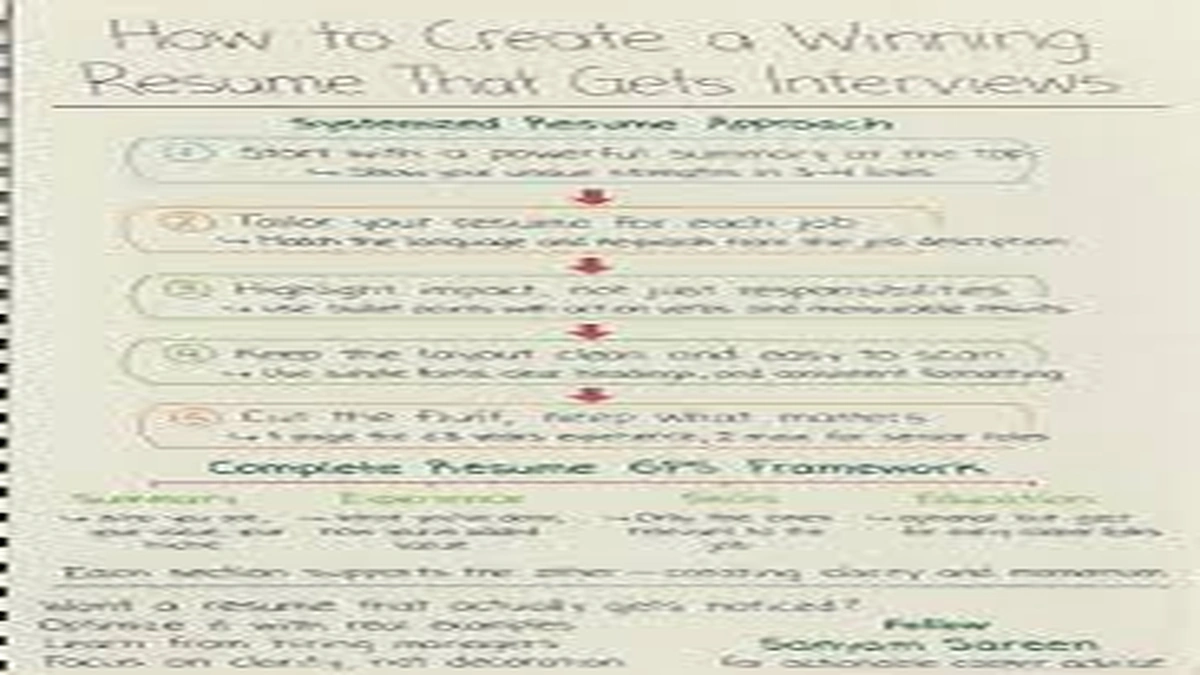
Picture this: You are sitting in a bustling café in HSR Layout, Bangalore. The high-pitched hiss of the espresso machine blends with the chatter of tech folks talking about funding rounds and API integrations. Across from you sits a incredibly talented friend, staring blankly at their laptop. They sigh deeply. “I have applied to over a hundred companies this month,” they tell you, “and all I have received are automated rejection emails sent at 3 AM.”
Does this sound familiar? It is an absolute gut-punch. Let us be completely honest with ourselves: job hunting is exhausting, and getting ghosted by companies is downright soul-crushing. You have spent years studying, working late nights, and mastering your craft. Yet, your application folder remains a graveyard of unanswered emails.
But here is what I realized after years of recruiting and looking at thousands of candidates: the problem usually is not your skill set. The problem is that you are writing your resume for a human, while the actual gatekeeper is a cold, unfeeling algorithm. Today, I want to share a raw, honest, and battle-tested guide on How to Write a Resume That Gets More Interviews. This is not some generic advice you have read a thousand times; this is a step-by-step blueprint designed to beat the modern hiring game.
1. The Invisible Gatekeeper: Cracking the ATS Code
Let us pull back the curtain on how hiring actually works today. Most job seekers assume that a friendly recruiter sits down with a hot cup of chai and reads through every single application. Unfortunately, that is a complete myth. Major companies, and even growing startups, receive hundreds of applications per post. To survive the deluge, they use a tool called an applicant tracking system (ATS).
This software parses your document, strips away the design, and ranks you based on keywords before a human recruiter even knows you exist. If your resume does not pass this automated scan, it gets dropped into a digital black hole. This is why having an ATS-friendly resume is absolute table stakes in today’s job market.
A common mistake I see people make is choosing highly visual layouts from online graphic design tools. They feature progress bars for skills, complex multi-column grids, and custom icons. While these look beautiful to the human eye, the parser reads them as garbled nonsense. The system reads left-to-right, top-to-bottom. If your details are locked inside complex tables or sidebars, they might be ignored entirely.
To fix this, keep your resume formatting clean, minimal, and linear. Stick to standard, web-safe fonts like Calibri, Arial, or Georgia. Avoid placing crucial contact details inside the header or footer, as some parsers bypass those areas. If you want to check your current template style against standard industry systems, you can easily research modern design structures on an innovative tech platform to understand what recruiters are actively seeking today.
2. Focus on Achievements, Not Just Daily Duties
Here is a piece of advice that will instantly place you in the top 10% of applicants: stop writing a resume that reads like a boring job description. I see this error on almost every CV I review. People write bullet points like: “Responsible for managing social media accounts,” or “Duties included maintaining code repositories.”
These descriptions do not tell the recruiter how good you were at your job. They only describe what you were supposed to do. Recruiters do not hire people for performing duties; they hire them to deliver results.
This is where you need to implement one of the most powerful resume writing tips in existence: the Google X-Y-Z formula. The formula states that you should describe your work as: “Accomplished [X] as measured by [Y], by doing [Z].” Let us transform a dull bullet point to see how this works in practice.
Instead of saying: “Managed team projects and improved delivery cycles,” you should write: “Led a cross-functional squad of 6 engineers to launch a mobile application 2 weeks ahead of schedule, reducing project delivery times by 18% through Agile methodologies.”
See the massive difference? The second version is concrete, impactful, and undeniable. It shows exactly how you added value. Whether you are figuring out how to write a CV for a technical role or a creative position, quantifying your achievements builds immediate trust. Numbers provide immediate scale and context to your capabilities.
3. The Art of Customization (Without Losing Your Mind)
I know what you are thinking. “Writing customized resumes for every single job application is way too much work.” And yes, it is tedious. But sending a single, generic CV to 80 different companies is a complete waste of time. It is far better to send 10 highly targeted applications than 100 generic ones.
The secret is that the job description is actually a cheat sheet. The employer is literally giving you the answers to the test. If a job posting lists “data analysis using SQL” and “stakeholder management” as top priorities, those exact terms need to appear in your resume.
This does not mean you should lie. It means you must translate your existing experience into their specific language. If your previous company called it “client communication,” but the job description calls it “account management,” update your terms. It is a minor change that makes a massive impact on your match score inside the algorithm.
If you are looking to pivot your career, perhaps exploring some of the best remote jobs for beginners in the digital market, this customization is critical. Highlighting transferable skills like asynchronous communication, self-management, and proficiency with digital tools like Slack or Notion can make up for a lack of traditional office experience. Aligning these factors is a foundational part of effective job application tips that get you noticed early.
4. Structure and Layout: Summary vs. Objective
Let us talk about the very first section of your resume. If your document still starts with a “Career Objective” that reads like a generic template about “seeking a challenging position to utilize my skills,” please delete it right now. It is outdated, self-serving, and wastes valuable space.
Instead, use a “Professional Summary.” This is your 30-second elevator pitch. It should highlight your years of experience, your core domain expertise, and one standout achievement that proves you know your stuff.
Keep your overall design uncluttered. Ensure there is plenty of whitespace so the recruiter’s eye can navigate the page without feeling overwhelmed. If you are using modern, clean professional resume templates, they will naturally guide the recruiter to your most important achievements. For a deeper look at how automated hiring systems process text formatting and layouts, you can read Wikipedia’s explanation of ATS which breaks down the background mechanics of corporate hiring platforms.
Frequently Asked Questions About Resume Writing
How long should my resume be?
For anyone with under 8 years of experience, a single-page resume is highly recommended. It forces you to keep your messaging concise and high-impact. If you have over a decade of deep, highly relevant experience, extending your document to two pages is perfectly fine.
Is a PDF always the best format to upload?
Yes, PDF is generally the safest format because it preserves your clean formatting perfectly across all devices and operating systems. However, always double-check the application system’s guidelines, as some older portals specifically request Microsoft Word (.docx) formats.
Should I include my graduation marks or GPA?
If you are a recent graduate with limited work experience, including a high GPA (above 8.0 CGPA or equivalent) is helpful. However, once you have gathered 2 or more years of professional experience, your college marks become far less relevant and can be removed to save space.
How far back should my professional history go?
Generally, you should focus on the last 10 to 12 years of your career history. Any roles older than that can be highly condensed or omitted entirely, unless they are directly relevant to the specific role you are applying for today.
Do I need to put a photograph on my resume?
Unless you are applying for a role in acting, modeling, or certain creative media fields in India, it is highly recommended to leave your photo off your resume. This helps prevent unconscious bias and keeps the focus entirely on your professional merits.
The Final Insight
At the end of the day, your resume is not a comprehensive autobiography; it is a highly targeted marketing brochure. Its sole purpose is to get you a 30-minute introductory phone call with a recruiter. When you stop focusing on listing every single task you have ever performed and start focusing on clearly demonstrating your value, your reply rates will transform. Take a breath, open your resume draft, apply these changes, and get ready for your next big opportunity.